19/20 November 2026 - Civic Offices Drogheda
An Meitheal(meh-hal) Digiteach
Connect. Share. Build. Accelerate.
A two-day working meitheal (meh-hal) for people building better public and civic services — bringing real challenges, reusable digital building blocks and people prepared to help.
Countdown to 19 November
Come to help. Come needing help. Come ready to learn.
- Dates
- 19–20 November 2026
- Venue
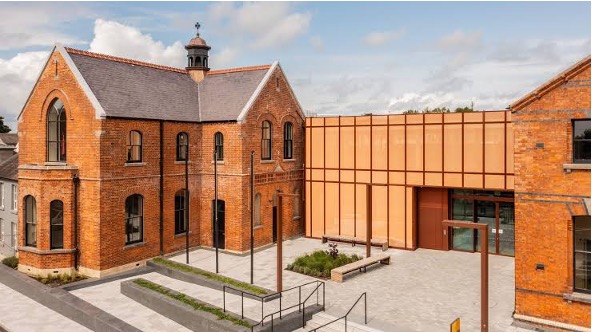
- Louth County Council Civic Offices, Drogheda
- Format
- Curated participation · Everyone contributes
What is a meitheal (meh-hal)?
The Irish tradition of neighbours working together — applied to digital public services.
A meitheal (meh-hal) was the neighbours arriving to save the hay or bring in the harvest: the work was too big for one household, so everyone came, and everyone got their turn. No one was a spectator.
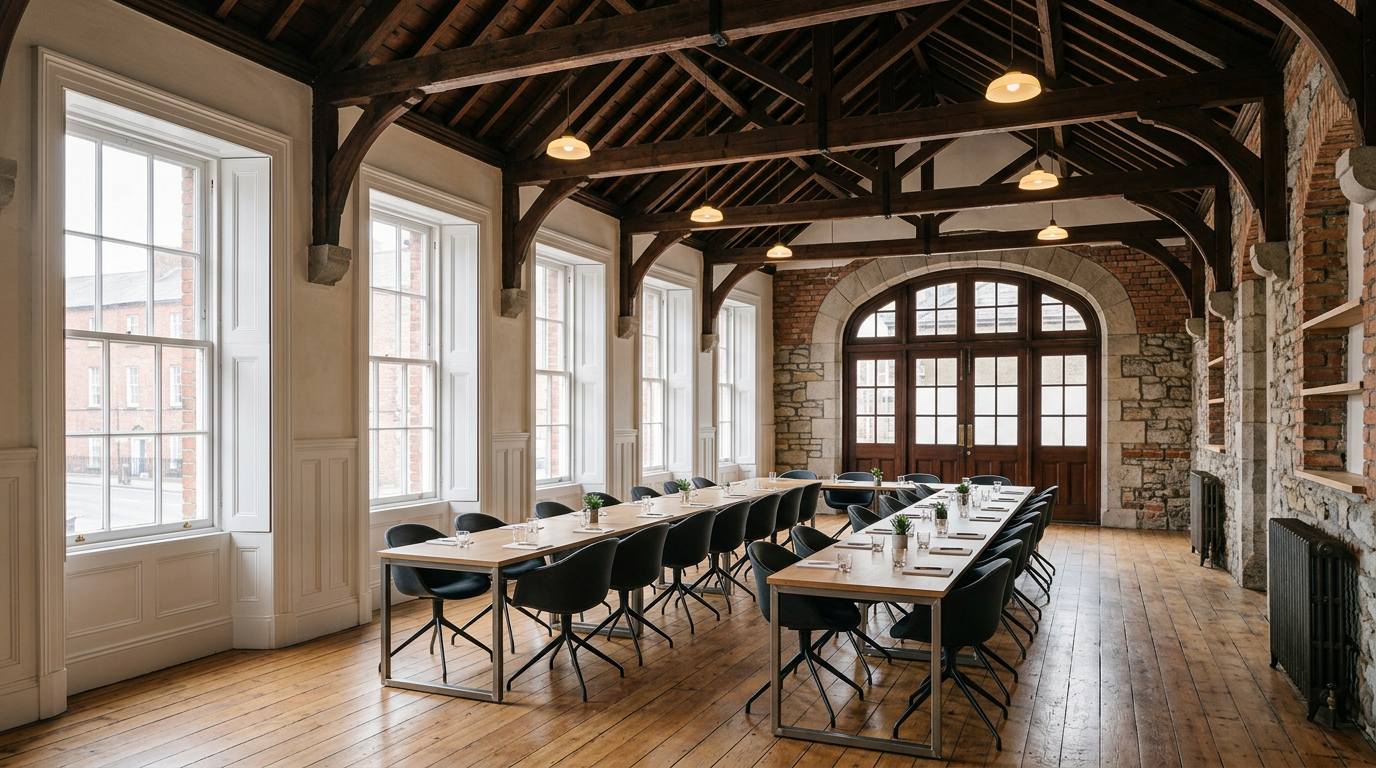
An Meitheal (meh-hal) Digiteach brings public, private, academic and civic practitioners together for two days of work on real public-service challenges. It is not a conference. It is a working event: people bring problems, lend expertise and build the next step together.
Bring a real challenge
Something you own, live with or have to deliver — not a hypothetical.
Bring something you can share
Code, data, a pattern, a policy, a scar. Reusable beats bespoke.
Leave with a next action
A named person, a date and something concrete to do next.
Why now
Europe is building the infrastructure. The services are ours to design.
Ireland holds the Presidency of the Council of the EU as digital public infrastructure moves from specification to reality. The components exist. What is missing is people working across boundaries to turn them into services that feel simple.
Identity & wallets
EU Digital Identity Wallets arrive across Member States, changing how people prove who they are and what they are entitled to.
Verifiable credentials
Qualifications, registrations and mandates can be issued once, held by people and checked by anyone who needs to.
Interoperable services
Shared building blocks let services connect across departments and borders instead of rebuilding the same plumbing.
Trust & authority
Knowing who can act, for whom and for how long is the hard problem underneath almost every digital service.
The blocks already exist
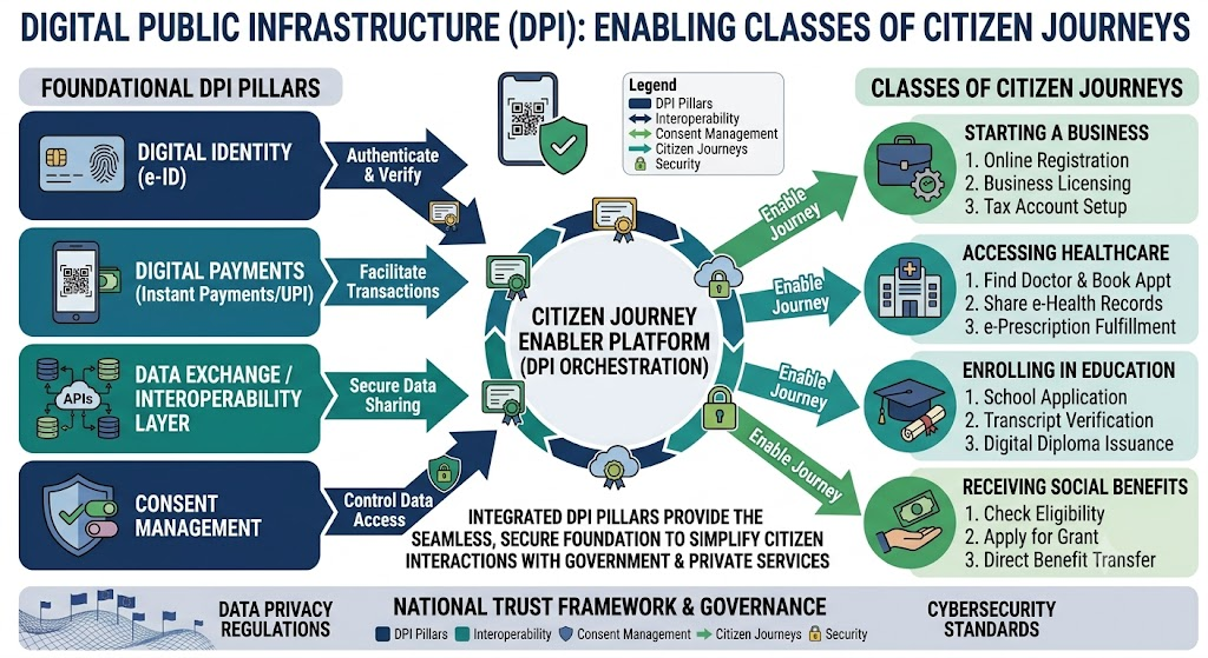
Digital public infrastructure 
EU Open Source Strategy 
Government Digital Wallet 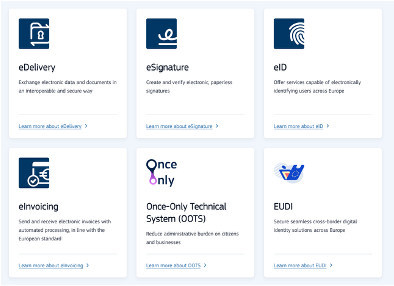
EU building blocks 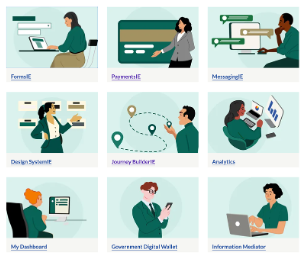
Irish government building blocks
The method
Four verbs. One span.
Each step places another block on the bridge. The last span is only finished by the people in the room.
- Step 1
Connect
Meet the people who own, deliver and live with the problem — across sectors and borders.
- Step 2
Share
Put reusable building blocks on the table: code, data models, patterns, policy and lessons.
- Step 3
Build
Work in open-space groups to make something real: a journey, a schema, a prototype, a pilot plan.
- Step 4
Accelerate
Red-team it, rebuild it and leave with a named next action and the people to do it with.
Run as Open Space
The agenda is built by participants on the morning. Anyone can convene a session; anyone can move to where they can help most.
- Whoever comes are the right people.
- Whatever happens is the only thing that could have.
- When it starts is the right time.
- When it’s over, it’s over.
Challenges
Real problems, owned by real people.
Five seed challenges anchor the two days. Each has a named owner, a clear question and guardrails. Pick the one where you can help most — or bring your own.
Showing 5 of 5 challenges
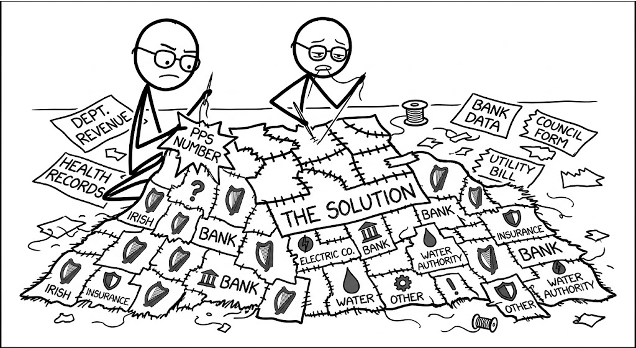
Today the citizen is the integration layer. They re-key the same facts into different portals, upload the same certificates to different bodies and carry the risk when one system cannot see another. Wallets and verifiable credentials make a different pattern possible: services ask for the minimum proof they need, the citizen presents it once, and the service trusts the issuer rather than the upload. The design work is in deciding which proofs, from whom, and what a service must stop asking for.
How might we redesign one real public-service journey so it asks only for the minimum trustworthy proof — and nothing else?
Request an invitation (opens your email app)Help wanted
- Service designers
- Wallet and credential architects
- Policy owners for a live service
- Data protection specialists
- People with lived experience of the journey
Expected outputs
- A mapped as-is and to-be journey for one service
- A minimum-proof specification: claims, issuers and assurance level
- A list of forms, fields or uploads that can be retired
- A named owner for a follow-up pilot conversation
Guardrails
- No new central database of citizen data
- Offline and assisted routes remain first-class
- Selective disclosure by default
A newly qualified clinician moves through a chain of separate claims: a degree, a professional registration, a health-service professional identifier, an employment contract and a local grant of clinical privileges. Each is issued by a different authority and checked in a different way, often by hand. Systems frequently collapse these into a single notion of “verified”, which is both slower and less safe than keeping each claim distinct and machine-checkable.
How might we model the path from graduation to clinical practice as a chain of distinct, verifiable claims that each authority can issue and every service can check?
Request an invitation (opens your email app)Help wanted
- Health informaticians
- Professional regulators
- HR and workforce leads
- Identity and trust-framework architects
- Clinicians who have made the journey recently
Expected outputs
- A claim map: who issues what, on what evidence
- A draft credential schema for at least two claims
- A shortlist of checks that can move from manual to automatic
- A risk register of claim confusion today
Guardrails
- Never treat a qualification as authority to practise
- Regulators remain the source of truth for registration
- Patient safety over onboarding speed
People regularly act on behalf of others: parents for children, carers for adults, decision-making supporters under assisted capacity law, executors after a death. Public services rarely have a consistent way to express that authority. It is proved with letters, court orders and phone calls, rarely scoped to a task or a period, and hard to revoke. The result is both exclusion of legitimate representatives and exposure to misuse.
How might we express “who can act for whom, for what, and until when” in a way that services can check and people can revoke?
Request an invitation (opens your email app)Help wanted
- Legal and policy specialists in capacity and guardianship
- Delegation and authorisation architects
- Frontline caseworkers
- Advocacy and disability organisations
- Service designers
Expected outputs
- A catalogue of representation relationships and their legal basis
- A delegation model with scope, duration and revocation
- Two or three priority journeys to prototype
- Guardrails agreed with advocacy representatives
Guardrails
- The represented person stays at the centre and informed
- Revocation must be as easy as granting
- No inference of authority from family relationship alone
Clubs, residents’ associations and community groups are asked the same questions by every funder, council and bank: who are you, who is on your committee, and who may sign for you. Many are unincorporated, so there is no register to point to. Volunteers re-submit constitutions, minutes and bank letters for each application, and the evidence goes stale as committees change each year.
How might a voluntary group prove who it is and who can act for it once, keep that proof current, and reuse it across funders and authorities?
Request an invitation (opens your email app)Help wanted
- Community and voluntary sector representatives
- Grant-making and local-authority officers
- Organisational identity specialists
- Charity and company law specialists
- Club secretaries and treasurers
Expected outputs
- A minimum common evidence set for small groups
- A lightweight mandate credential concept
- A funder commitment to test reuse in one scheme
Guardrails
- Do not create legal personality where none exists
- Volunteer burden must fall, not shift
- Works for groups with no paid staff
Every sports club and youth organisation must vet volunteers who work with children and vulnerable adults. Today that often means a volunteer photocopies a passport and utility bill, hands them to another volunteer, and the copies sit in a folder or inbox. The same person repeats this for each club they help. Safeguarding is essential; the document handling around it is not.
How might volunteers prove identity for vetting once, without clubs ever holding copies of their documents, while safeguarding officers stay accountable?
Request an invitation (opens your email app)Help wanted
- Safeguarding and child-protection officers
- National governing bodies of sport
- Vetting bureau and identity-assurance specialists
- Data protection officers
- Volunteer coordinators
Expected outputs
- A current-state map of document handling in vetting
- A document-free identity step for the vetting journey
- A records-retention recommendation for clubs
- Agreement on a pilot with one governing body
Guardrails
- Safeguarding duties are not diluted
- A human remains accountable for vetting decisions
- Accessible to volunteers without smartphones
Programme
Two days, one working rhythm.
Times are indicative. The Open Space agenda is set by participants on the morning of Day 1.
Thursday 19 November
Opening Circle
Welcome, Presidency framing, Meitheal (meh-hal) and Open Space principles.
Marketplace
One-minute pitches clustered into an emergent agenda.
Open Space Breakouts
Three working slots: convene, help and play.
Questions, Ideas & Continued Breakouts
New pitches, group updates and continued work.
Closing Circle, Pint & Craic
Reflection followed by dinner.
Who should come
Everyone contributes. No spectators.
Participation is curated so each challenge has the mix of people it needs. Tell us what you can help with, or what you need help with.
Public servants
Service owners, policy leads, architects and frontline staff who deliver and live with the systems.
Industry
Builders of wallets, credentials, platforms and integrations who want their work to land in real services.
Academia
Researchers in identity, trust, law, design and ethics who can test ideas against evidence.
Civic & voluntary
Clubs, charities and advocacy groups who carry the burden when services do not join up.
Standards & EU
People shaping the frameworks and specifications that make interoperability possible.
Lived experience
People who have navigated the journeys — the most important expertise in the room.
Venue
Civic Offices, Fair Street, Drogheda.
A civic building for civic work — hosted by Louth County Council in the heart of Drogheda, midway between Dublin and Belfast.
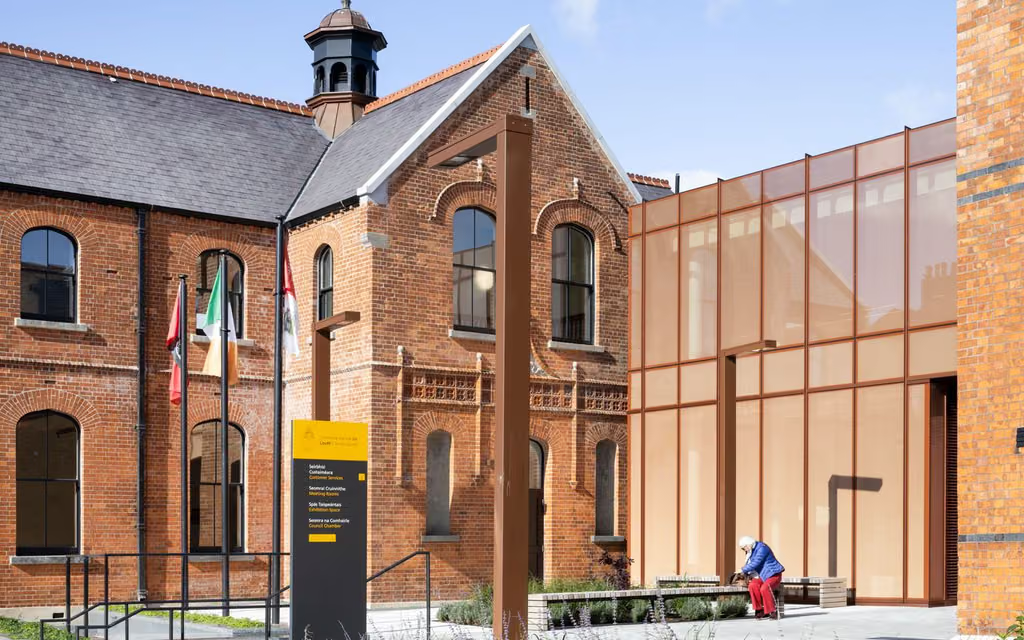
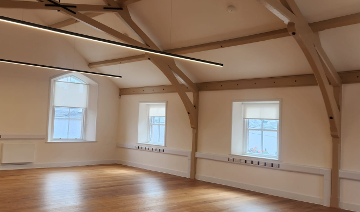
Louth County Council Civic Offices
Fair Street
Drogheda, Co. Louth
A92 P440
Venue reception: 041 983 3511
Access and accessibility
Tell us what you need to take part fully — step-free access, hearing support, quiet space, dietary requirements or anything else. We will confirm arrangements with the venue before you travel.
Contact us about accessGetting here
On the Dublin–Belfast corridor.
Timetables change. Always check the live operator link before you travel.
Dublin Airport → Drogheda
- Expressway route 100X connects Dublin Airport with Drogheda and Dundalk.
- Check the live timetable before you travel; schedules change seasonally.
Arriving via Belfast? Use the journey planner to combine an airport transfer with Belfast–Drogheda rail or coach.
Where to stay
Stay in Drogheda.
Event rates are limited and subject to availability. Book directly using the event name shown below.
The Marcy Hotel
Town centreWest Street, Drogheda
A refurbished boutique hotel on West Street in central Drogheda.
- Event offer
- Event rate to be confirmed by the organiser
- When booking, quote
- An Meitheal Digiteach 2026
- Room hold until
- 5 October 2026
Book direct(opens in a new tab)Details verified 30 September 2026Scholars Townhouse
Town centreKing Street, Drogheda
A historic boutique hotel in central Drogheda, dating from 1867.
- Event offer
- Event rate to be confirmed by the organiser
- When booking, quote
- An Meitheal Digiteach 2026
- Room hold until
- 5 October 2026
Book direct(opens in a new tab)Details verified 30 September 2026Sunday Street
Town centreSunday’s Gate, Drogheda
Twelve boutique rooms at Sunday’s Gate, above a Neapolitan pizzeria.
- Event offer
- Event rate to be confirmed by the organiser
- When booking, quote
- An Meitheal Digiteach 2026
- Room hold until
- 5 October 2026
Book direct(opens in a new tab)Details verified 30 September 2026CityNorth Hotel
On the M1 corridor, south of DroghedaGormanston, Co. Meath, K32 W562
A four-star hotel and conference centre off the M1 at Gormanston.
Outside Drogheda — allow for a car or taxi transfer to Fair Street.
- Event offer
- Event rate to be confirmed by the organiser
- When booking, quote
- An Meitheal Digiteach 2026
- Room hold until
- 5 October 2026
Book direct(opens in a new tab)Details verified 30 September 2026
Partners
A meitheal (meh-hal) needs many hands.
An Meitheal (meh-hal) Digiteach is organised in partnership with public, academic, community and industry organisations.





Help build the next span.
19–20 November 2026 · Louth County Council Civic Offices, Drogheda. Come to help. Come needing help. Come ready to learn.